SHANGRALA'S

IN
THE
WILD
TRIVIA!

'Explaining The Wild' Instagram page shares
fascinating information about animals, plants, and geography alike - basically, all
things nature. Their mission is for people to "learn about nature one post at a time."
Nature is filled with such beautiful wildlife; some are majestic, some colorful,
some bizarre, some cute, but all wonderful in their own way. Nothing about
wildlife may surprise us anymore, but there are still lots we can learn. Scroll
down to learn about the above waterfall mystery.
God's Planet Earth Is Super Amazing! Enjoy! :)
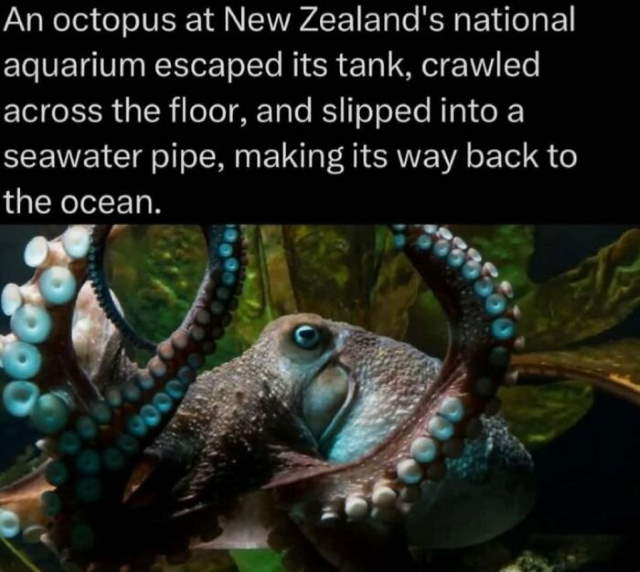
In 2016, an octopus named Inky pulled off one of the most audacious 'prison breaks'
in history at the National Aquarium of New Zealand. After a maintenance worker left
a tiny gap in his tank lid, he squeezed his rugby-ball-sized body through the
opening and dropped to the floor. Following a trail of water, aquarium staff
discovered that Inky had crawled eight feet across the room to a 150mm-wide floor
drain, which led directly to a 50-meter pipe emptying into the Pacific Ocean.
This incredible escape highlights the problem-solving skills and unique physiology
that make octopuses the ultimate 'Houdinis' of the sea. Because they have no bones,
an octopus can fit through any opening as long as it is large enough for their
hard, parrot-like beak to pass through. Inky's journey back to the wild remains a
legendary example of how high intelligence and a drive for exploration can overcome
even the most secure human environments.
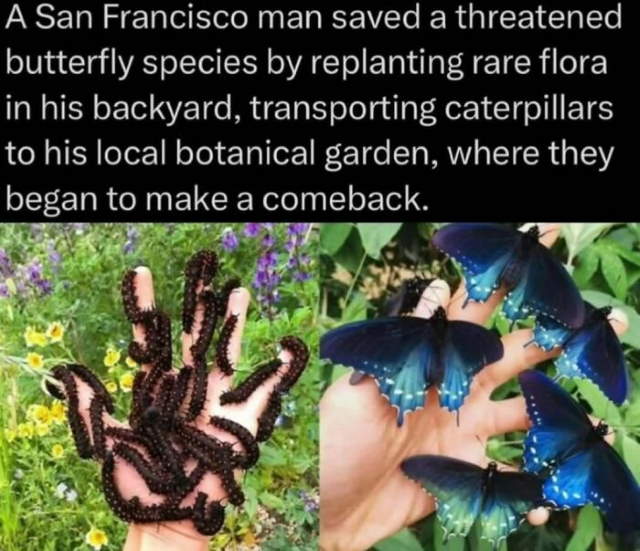
Conservation often feels like a task for giant organizations, but Tim Wong, a
biologist in San Francisco, proved that a single backyard can change the fate
of a species. For years, the California Pipevine Swallowtail butterfly had all
but disappeared from the city due to urban development destroying its only food
source: the rare California Pipevine plant. Wong decided to take action by
building a specialized screen enclosure in his backyard, filling it with the
rare flora he painstakingly cultivated from clippings.
Starting with just 20 caterpillars sourced from outside the city, Wong
meticulously cared for the population as they transformed into stunning
iridescent blue butterflies. Since 2012, his DIY sanctuary has been so
successful that he has been able to transport thousands of caterpillars back
to the San Francisco Botanical Garden to repopulate their ancestral home. It's
a breathtaking reminder that stewardship starts at home and that one person's
dedication can weave a lost piece of nature back into the urban fabric.
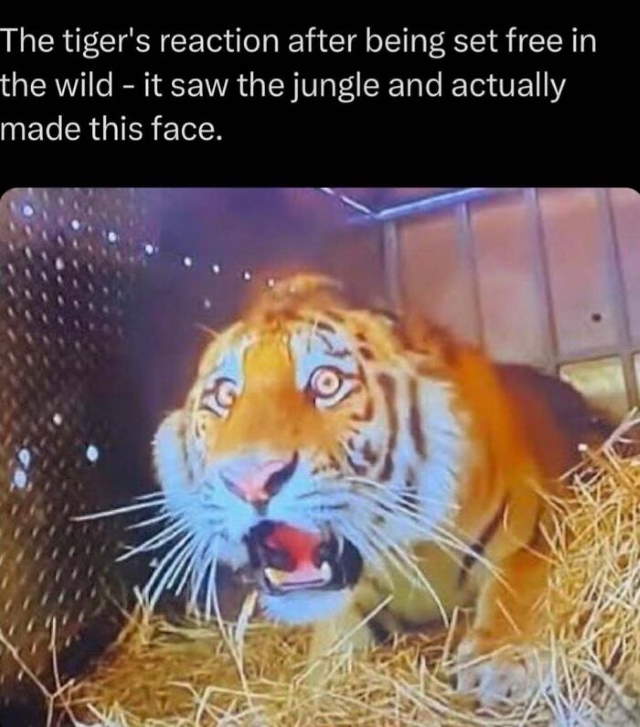
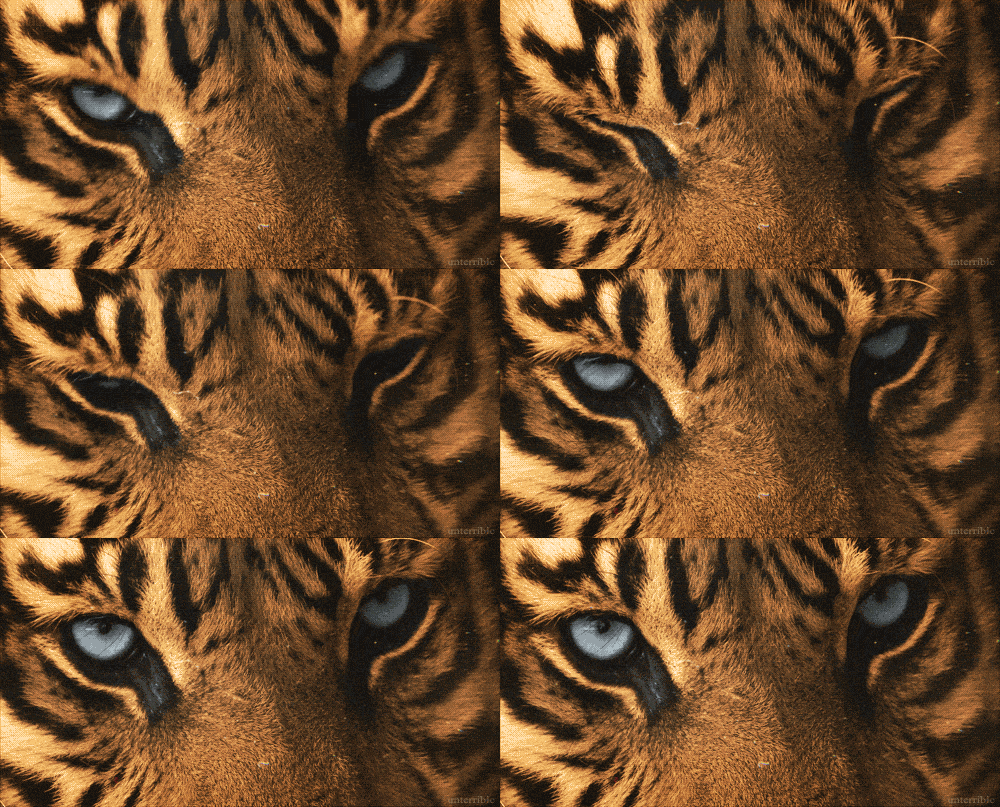
A tiger's release back into the wild is often captured in slow motion,
showcasing power and grace, but one particular rescue resulted in a surprisingly
human expression. After spending time in captivity or rehabilitation, being
faced with the sheer vastness of the jungle can trigger a sensory overload. This
specific tiger, upon seeing the dense green canopy of its ancestral home for the
first time, froze with a wide-eyed, open-mouthed expression that looked less
like a predator and more like a shocked traveler.
This 'face' is actually a combination of genuine surprise and the flehmen
response, where a tiger pulls back its lips to pick up pheromones and scents
through the roof of its mouth. In this moment, the tiger wasn't just looking
at the jungle; it was 'tasting' the air to map out its new territory and
identify the presence of prey or rivals. It is a rare, candid glimpse into the
emotional and biological complexity of a big cat transitioning from a confined
world back to the untamed wild.
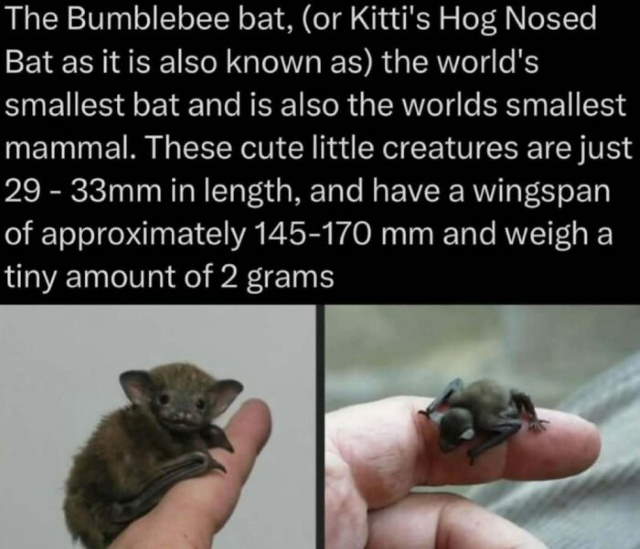
Deep in the limestone caves of Thailand and Myanmar lives a creature so small it's
often mistaken for a large insect. The Bumblebee bat, or Kitti's Hog-nosed Bat,
holds the title of the world's smallest mammal, weighing a mere 2 grams-about the
same as a single penny.
These tiny survivors measure only 29 to 33mm in length, but don't let their size
fool you. With a wingspan reaching up to 170mm, they are incredibly agile hunters,
using echolocation to snag insects mid-air. Their unique, pig-like snout is where
they get their name, an evolutionary trait that helps them navigate the dark,
humid crevices they call home. Seeing one resting on a human fingertip really
puts the incredible diversity of the mammal kingdom into perspective.
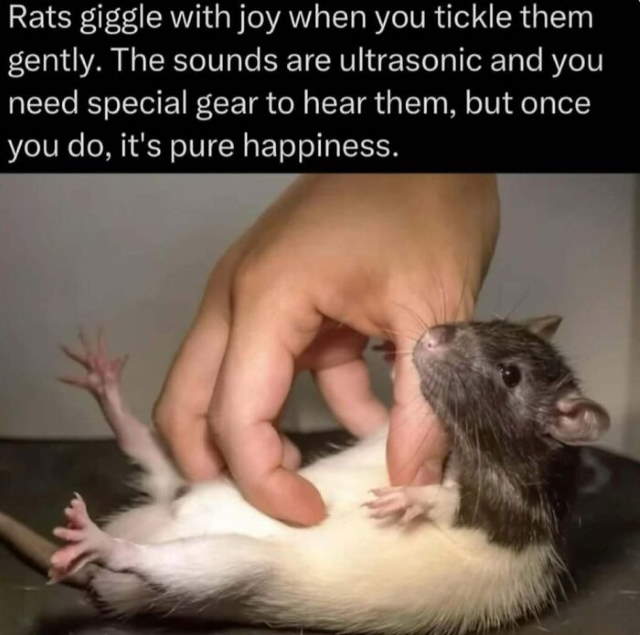
Who knew these clever little creatures had such a sense of humor? Pioneering
research by neuroscientist Jaak Panksepp in the 1990s revealed that young rats
produce high-frequency 50 kHz chirps-essentially laughter-during playful tickling
sessions. These ultrasonic sounds, beyond human hearing, signal happiness and
even encourage more interaction, much like a child's giggle. Far from the pests
of urban lore, rats in the wild and as pets demonstrate remarkable intelligence,
empathy, and social bonds, thriving in complex environments from city sewers to
forest floors.
It's a reminder that God even gave these little ones joy that transcends species -
next time you spot a rat, imagine the hidden symphony of delight.
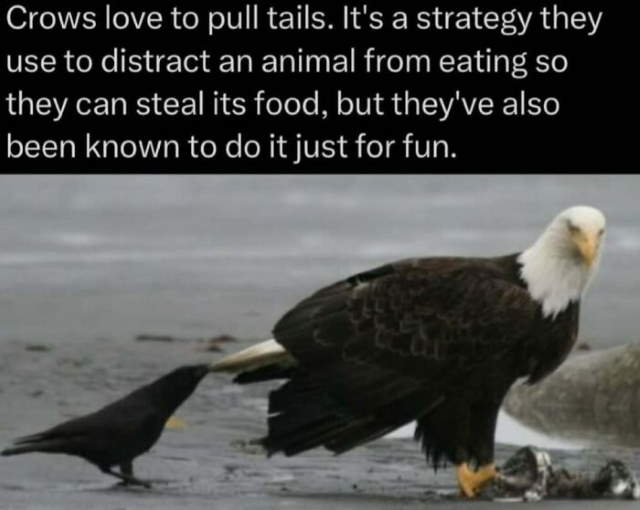
If you watch crows closely, you will eventually catch them sneaking up behind a
dog, cat, or even a massive eagle to sharply yank its tail. While it looks like
pure mischief, this is actually a highly intelligent survival tactic. Crows pull
tails primarily to distract predators and scavengers. By annoying a larger
animal until it turns around, they create the perfect opening for another crow
to swoop in and steal its food.
Biologists have also noticed them doing it when there is no food around at all.
These remarkably smart birds seem to play pranks just for fun, testing the
reactions of other animals out of sheer curiosity. It is a brilliant display
of avian intellect and a perfect example of God smiling over his creation.
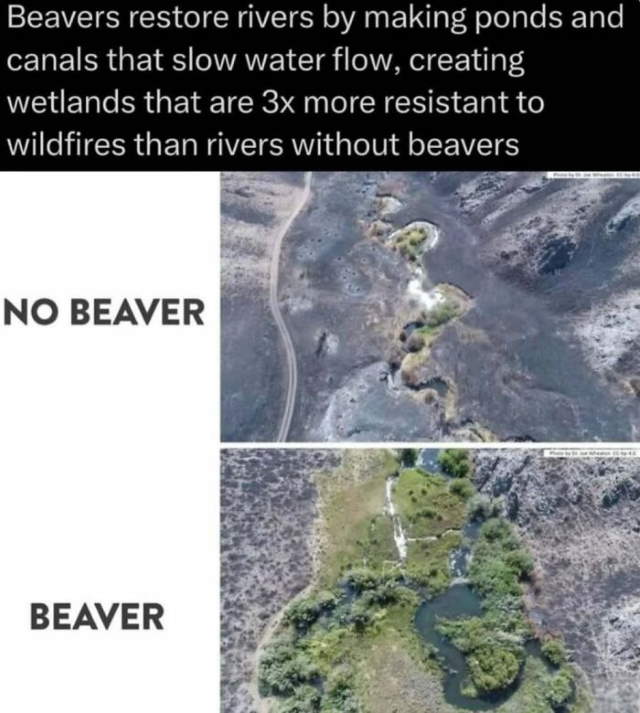
Beavers are often called 'nature's engineers,' but their impact goes far beyond
just building dams. By creating complex networks of ponds and canals, these
rodents fundamentally change the hydrology of the landscape, slowing down rushing
water and forcing it to soak into the soil. This process creates massive, lush
wetlands that stay hydrated even during intense droughts, acting as a biological
sponge that keeps the surrounding vegetation green and vibrant.
The most incredible result of God's little engineering marvels is their ability to
stop the spread of massive forest fires. These beaver-created wetlands are three
times more resistant to wildfires than areas without them, serving as natural
firebreaks that protect entire ecosystems from being leveled. When the smoke
clears, the 'beaver patches' are often the only green spaces left standing,
providing a vital sanctuary for other wildlife to survive and recover.
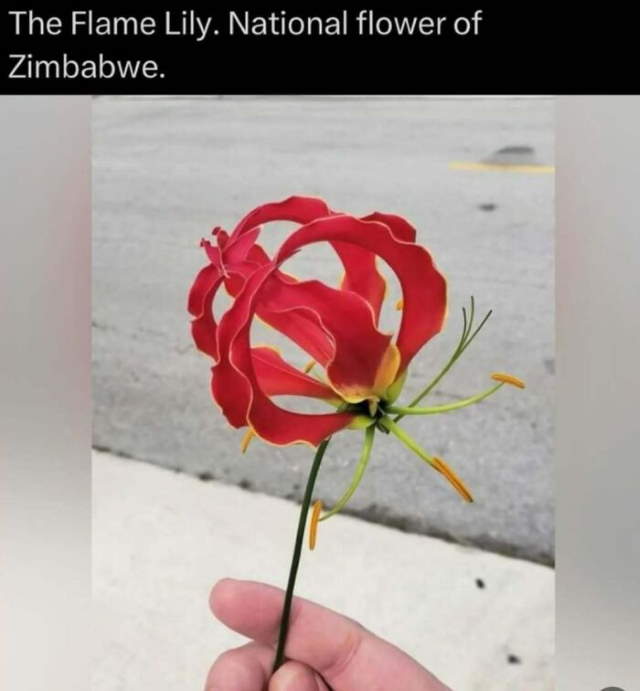
Zimbabwe's landscapes burst with color, and at their heart is the Flame Lily-a
climbing perennial native to tropical Africa that has captivated cultures for
centuries.
Officially adopted as the national emblem in 1980, its flame-like petals shift
from yellow to vivid red as they bloom, twisting upward on tendrils that allow
it to scale trees and shrubs up to 4 metres high. While breathtakingly beautiful,
it's also potent: every part of the plant contains colchicine, a toxic alkaloid
used in traditional medicine for ailments like gout and even in modern cancer
treatments. Found across savannas and woodlands, it thrives in the region's
seasonal rains, reminding us of God's dual gifts in nature of wonder and caution.
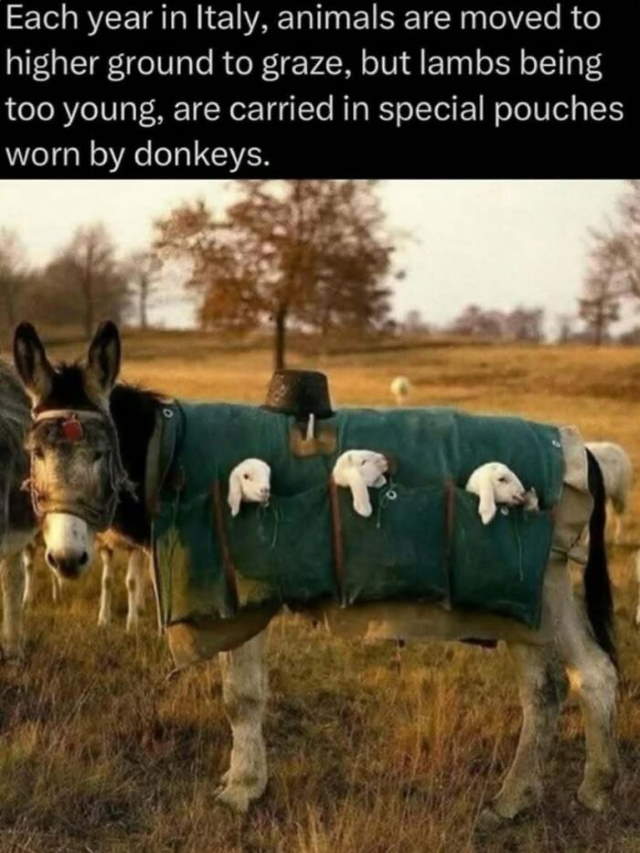
Every year in Italy, shepherds participate in an ancient migration tradition
called transhumance, moving their massive flocks to higher mountainous grounds
for fresh summer pasture. It is a grueling journey across rugged, beautiful
landscapes. While the adult sheep can easily handle the steep trek, the newborn
lambs are simply too little and weak to make the climb.
To ensure no baby is left behind, shepherds use a heartwarming solution. They
tuck the exhausted tiny lambs into specially designed saddlebags worn by
reliable donkeys. These gentle 'lamb taxis' safely carry the newborns up the
mountain, a beautiful reminder of the care and harmony between humans and their
working animals. And a perfect example of how Christ cares for us as our good
shephard - making sure none of us are ever left behind.
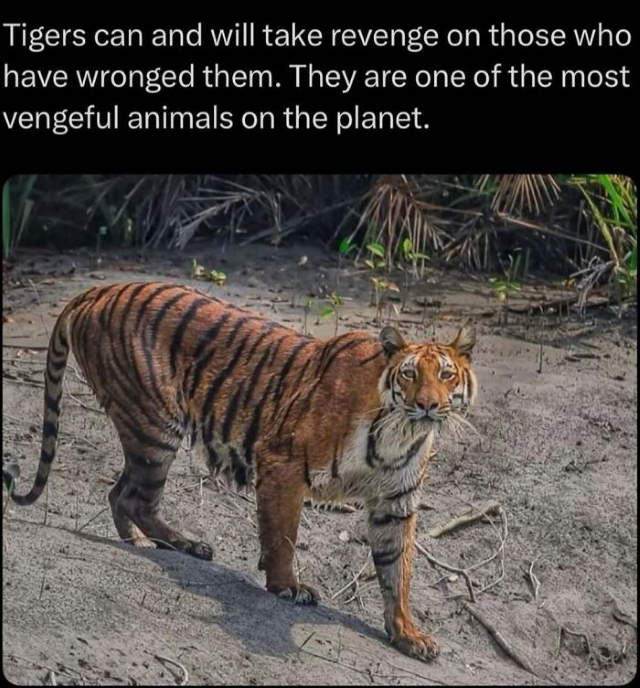
While many predators hunt purely for survival, tigers possess a sophisticated
memory and emotional intelligence that allows them to hold grudges. They are
widely considered one of the most vengeful animals on Earth, capable of tracking
a specific human or animal for miles if they feel threatened or wronged.
Unlike most wildlife that flees after a conflict, a tiger may wait days or even
weeks to strike back at a specific individual who injured them or intruded upon
their territory.
The most famous instance of this occurred in 1997, when a
poacher wounded a Siberian tiger and stole a portion of its prey. The tiger
didn't just move on; it systematically tracked the man's scent back to his remote
cabin, waited for his return, and eventually ambushed him. This level of
calculated retaliation proves that tigers don't just act on instinct-they possess
a complex cognitive map and a sense of 'justice' that makes them one of the most
formidable and respected apex predators in the natural world.
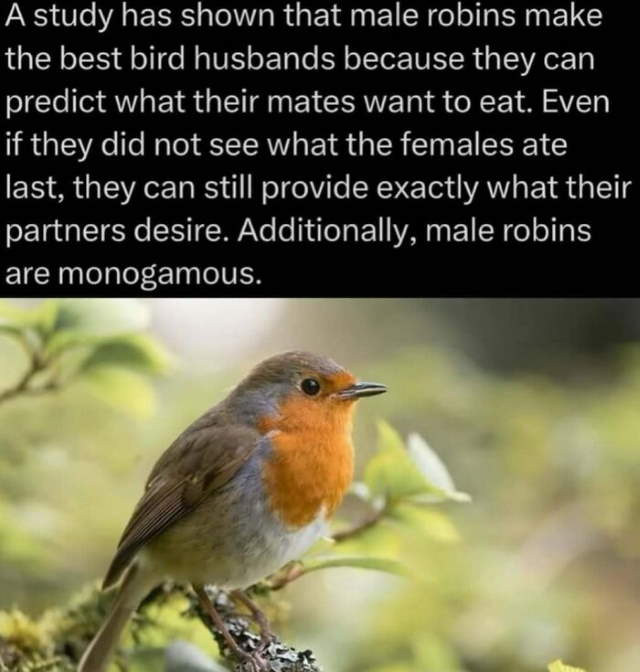
A charming discovery from behavioural research has confirmed what many
birdwatchers have long suspected, male robins make exceptional husbands. Studies
on the European robin (Erithacus rubecula) show that males can precisely anticipate
their partner's food preferences, delivering the exact insects, worms or berries
she desires, even when they have had no opportunity to observe what she ate earlier.
This impressive predictive ability, combined with their seasonal monogamy, helps
strengthen the pair bond and ensures successful chick-rearing.
These familiar red-breasted songsters, found across Europe, western Asia and North
Africa, are not only territorial defenders but also attentive providers who share
parenting duties with remarkable dedication. God's quiet lesson of love using
nature's partnership, right in our gardens and woodlands.
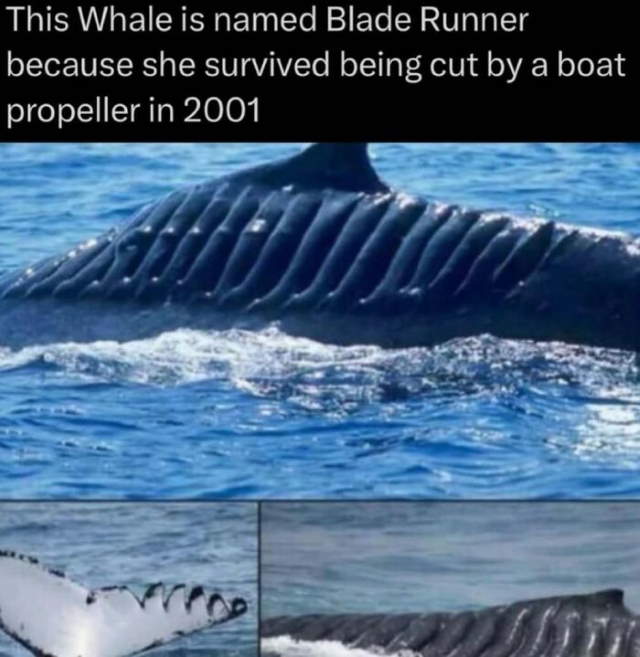
If you ever need proof of nature's resilience, look no further than a famous
humpback whale known as 'Blade Runner.' In 2001, she suffered a horrific
collision with a large ship's propeller off the coast of Australia. The strike
left her with a series of deep, parallel scars slicing down her back and dorsal
fin, earning her the sci-fi nickname.
Despite injuries that plunged up to a foot deep into her blubber, Blade Runner
miraculously survived the encounter. Even more incredible, she has been spotted
multiple times over the decades since, often swimming alongside her newborn
calves. Her distinct markings now serve as a powerful visual reminder to
mariners to share the ocean safely.
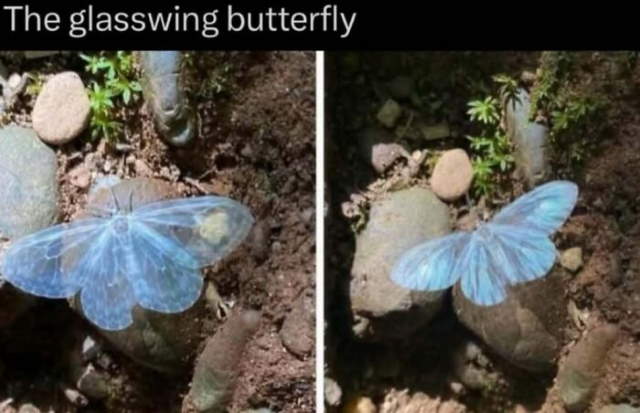
Imagine having wings that look like they are made of perfectly clear glass. The
glasswing butterfly roams the dense rainforests of Central and South America
doing exactly that.
Unlike other butterflies that use vibrant colors to warn off predators, the
glasswing relies on ultimate stealth. The clear sections of their wings completely
lack the microscopic colored scales that normally cover butterfly wings. To make
the illusion perfect, the surface of their wings is coated in tiny structures
that eliminate all reflection. Instead of catching the sun and sparkling, the
wings let light pass right through, making the butterfly practically invisible
to birds while in flight. It's an example of God's stunning masterpiece of
natural camouflage in nature.
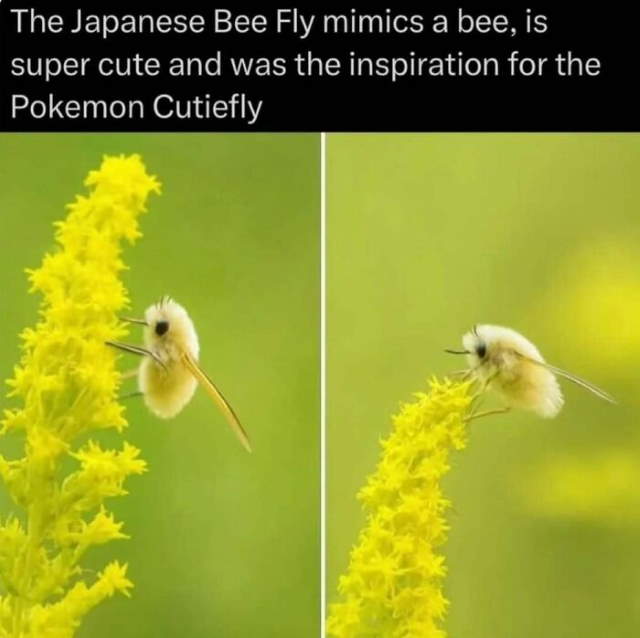
The Japanese Bee Fly is a perfect example of Batesian mimicry, where a harmless
insect evolves to look like a dangerous one to stay safe. With its fuzzy, golden
body and hovering flight pattern, it is easily mistaken for a bumblebee at a
glance, tricking predators into thinking it has a painful sting. This 'cute'
exterior is actually a highly effective survival suit, allowing the fly to move
peacefully between flowers to feed on nectar without being harassed by birds or
other insects.
Beyond its adorable appearance, the Japanese Bee Fly is one of God's biological
marvels. It inspired the Pokemon 'Cutiefly.' It possesses a long, needle-like
proboscis used for sipping nectar, which many mistake for a stinger, but it is
completely harmless to humans. While they look like fluffy toys, they are
incredibly agile fliers, capable of sudden bursts of speed and precise hovering
that even the most advanced drones struggle to replicate. It's a stunning
reminder that in nature God often combines beauty with brilliant tactical
defense.
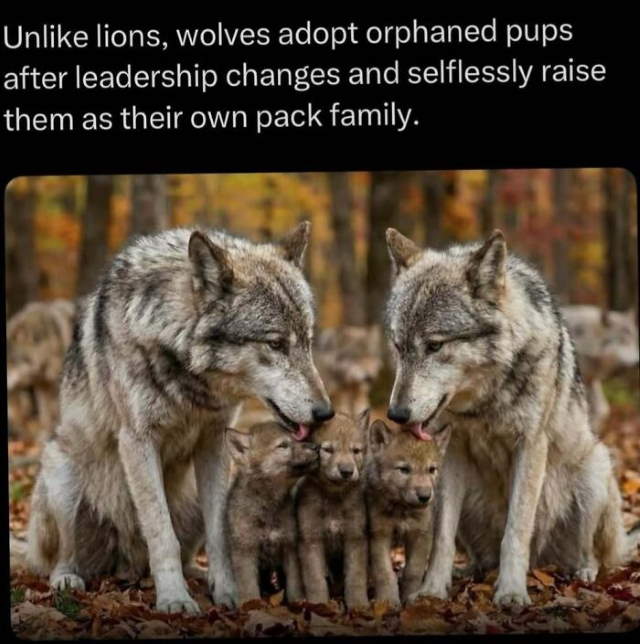
While many apex predators view unrelated young as rivals, wolves exhibit a
surprisingly high degree of social altruism through the adoption of orphaned
pups. In wolf society, the pack operates as a tight-knit family unit where the
'alpha' pair leads, but all members share the responsibility of pup-rearing.
When a pack loses its leaders or encounters an orphan from a neighboring group,
the remaining adults often step in to provide food and protection, ensuring the
pup's survival rather than abandoning it.
This behavior is rooted in the evolutionary drive to maintain pack strength and
genetic diversity. By integrating orphans, the pack increases its numbers,
which is vital for successful large-game hunting and territorial defense.
Unlike the competitive infanticide sometimes seen in lion prides during
leadership turnovers, the wolf's communal 'babysitting' approach highlights a
sophisticated emotional intelligence. It proves that for wolves, the survival
of the collective group often outweighs the individual's desire to prioritize
only their own direct offspring.
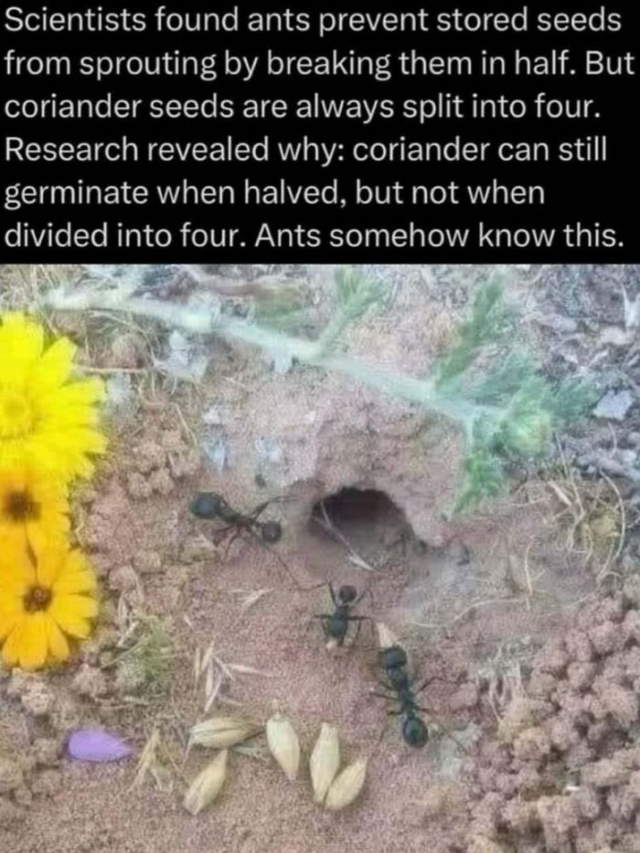
Ants are known for their incredible collective intelligence, but their
understanding of botanical physics is truly next level. To ensure their food
supply doesn't literally grow out of their underground granaries, harvester
ants systematically break stored seeds in half to prevent them from sprouting.
However, scientists noticed a strange exception with coriander seeds: the ants
always split them into exactly four pieces instead of two.
It turns out that coriander is uniquely resilient, and a seed split into just
two halves can still successfully germinate and ruin the nest. The ants have
somehow 'learned' that a four-way split is the only way to completely neutralize
the seed's growth potential. This level of biological engineering shows that
ants don't just act on simple instinct; they possess a complex, passed-down
knowledge of their environment that allows them to manage their resources with
surgical precision.
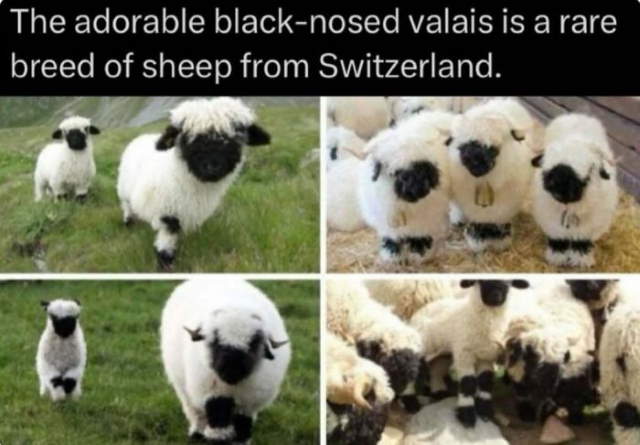
If you think this looks like a living stuffed animal, you aren't alone. Meet
the Valais Blacknose, a rare breed of sheep native to the freezing, rugged
mountains of Switzerland. They are universally dubbed the cutest sheep in the
world. Their distinct jet-black faces, ears, and knees contrast beautifully
with their ultra-fluffy white fleece.
But that adorable appearance hides incredible toughness. They were specifically
bred centuries ago to survive harsh Alpine winters and easily graze on extremely
steep, rocky slopes. Their thick, coarse wool provides the ultimate natural
insulation against sub-zero temperatures. It's a beautiful example of how an
animal can perfectly adapt to a brutal environment while maintaining a completely
unique cute look.
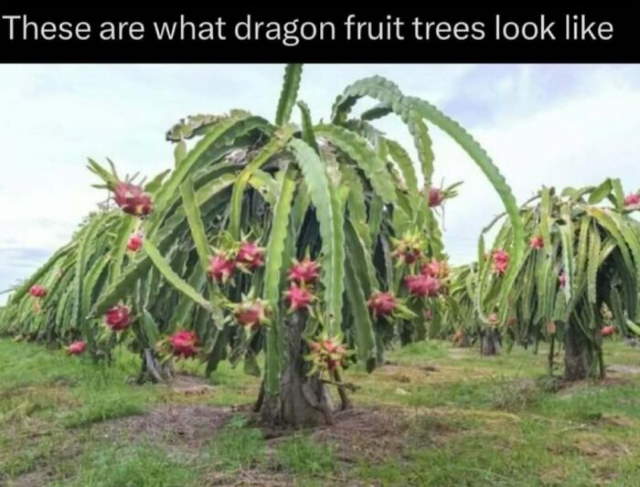
While dragon fruits are common in grocery stores, many people are surprised to
learn that they don’t grow on traditional trees with woody trunks. These vibrant
fruits actually come from a type of climbing cactus known as Hylocereus. In the
wild, these cacti use aerial roots to cling to trees or rocks, but in cultivation,
they are grown on sturdy T-shaped pillars that allow their long, succulent
branches to spill over like a fountain.
Because they are members of the cactus family, these plants are incredibly
resilient and thrive in tropical and subtropical environments. The plant
produces large, fragrant flowers that bloom only at night-often called 'moonflowers'
- which must be pollinated by bats or moths to produce the fruit. Once the flowers
fade, the scaly, neon-pink fruits begin to develop, creating a landscape that looks
like it belongs in a sci-fi movie. Seeing a commercial farm in full bloom is a
striking reminder of just how diverse and unusual God's plant kingdom can be.
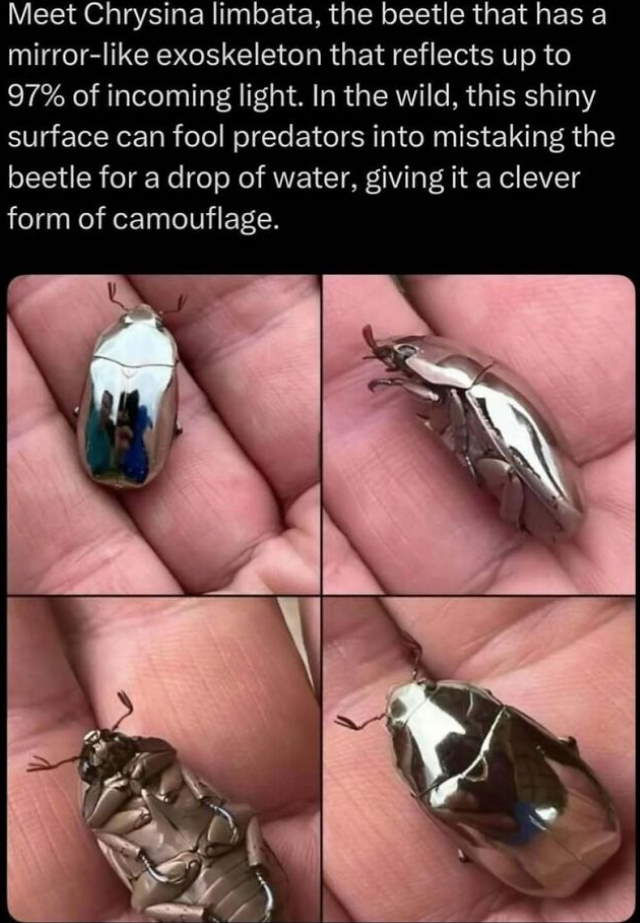
Deep in the rainforests of Central America lives Chrysina limbata, a beetle that
looks more like a piece of polished jewelry than a living insect. This incredible
creature possesses a solid silver, mirror-like exoskeleton that can reflect up to
97% of incoming light. While it looks flashy to us, this metallic shine is
actually a brilliant survival strategy; in the humid wild, the beetle's reflective
surface mimics a glistening drop of water or a gap in the foliage, perfectly
camouflaging it from hungry predators.
The science behind this 'living mirror' is found in the microscopic layers of its
shell. These layers are precisely structured to reflect light at different
wavelengths, creating a metallic luster without using any actual metal. Because
they are so rare and beautiful, these beetles have become highly sought after by
collectors, making their preservation in the tropical cloud forests more
important than ever. It is a stunning example of how nature uses complex
physics to turn a simple insect into a master of optical illusion.
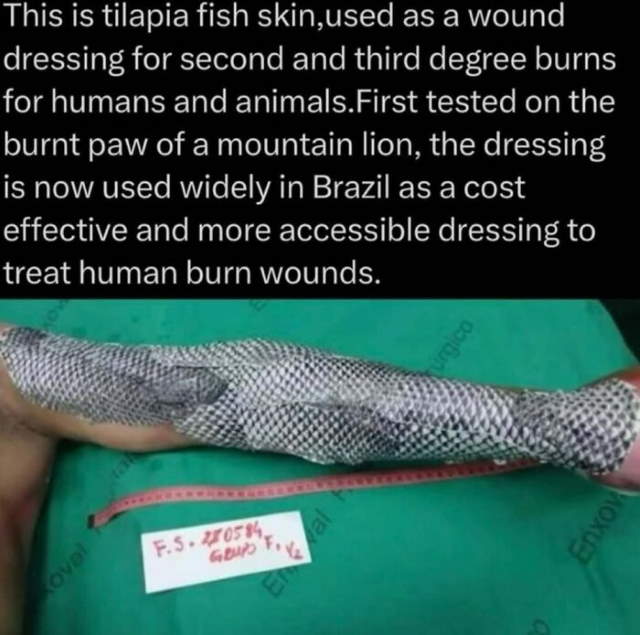
God, through nature, often provides the most efficient solutions our human
problems, and the use of tilapia fish skin as a biological bandage is a
perfect example of medical biomimicry. Rich in type 1 collagen and high levels
of moisture, processed tilapia skin acts as a protective barrier that speeds
up the healing of second and third-degree burns. Unlike traditional synthetic
bandages, it reduces the need for painful daily dressing changes, as it can
stay on the wound for several days while transferring vital proteins that
help regenerate human skin.
The practice gained global attention after being successfully used to treat
the burnt paws of a mountain lion during California wildfires, and it is now
widely utilized in Brazil as a cost-effective and accessible medical tool.
The skin is sterilized and stripped of scales and odor before being applied,
where it adheres to the wound and prevents infection better than many
standard treatments. This intersection of marine biology and medicine proves
that some of our most advanced healing technologies have been swimming in
our oceans all along.

Antarctica is home to one of the most eerie sights on the planet: Blood Falls,
a five-story waterfall that pours deep red liquid onto the white ice of the
Taylor Glacier. For over a century, the cause of this crimson hue was a
mystery, with early explorers assuming it was simply red algae. However,
scientists have finally discovered that the color comes from a prehistoric,
subglacial lake trapped under 1,300 feet of ice. This water is extremely rich
in iron, and the moment it seeps through cracks in the glacier and touches
the oxygen in the air, it 'rusts' instantly, turning the water a vivid
blood-red.
What's even more mind-blowing is that this waterfall remains liquid at
temperatures well below freezing. The secret lies in its chemistry; the water
is three times saltier than the ocean, creating a natural brine that prevents
it from turning to ice. As the water freezes internally, it actually releases
heat, warming the surrounding subglacial lake and keeping the system flowing.
This isolated, oxygen-free environment is even home to a unique community of
'extremophile' bacteria that have survived for millions of years, proving God
created this so that life can thrive even in the most impossible conditions
here on Earth.
All Source

Share Nature And Awe Your Friends
With God's Incredible Wildlife! :)


SEE ALSO: Dramatic Wildlife Photos!
^BACK To TOP^
For those of you who Want More FUN - Visit The Shangy Fun List! Variety is the
spice of life! The Shangy Fun List is an ezine packed full of Poems, Inspirational and
Heart Warming Stories. Jokes from G to slightly R, and Anything else that just
might make you SMILE! Join In The Free FUN!! ... :)
Yes! Click Here To GO TO THE ARCHIVES!-

Like This Page?
If you are looking for more, here are some good places to start:

Slow Loris!-
Red Panda!-
Mighty Bison!-
Bizarre Nature!-
Real Angry Birds!-
Beautiful Starfish!-
World Of Big Cats!-
Natural Show-Offs!-
Dangerous Critters!-
Comedy In Nature 6!-
Endangered Primates!-
Beautiful Exotic Birds!-
Amazing Animal Facts!-
Up Close And Personal!-
Cute Australian Wildlife!-
Most Intelligent Animals!-
Amazing Albino Animals!-
Creatures We Love To Hate!-
Incredible Wildlife Photos 5!-
World's Largest Turtle Population!-
A-Z Animated Picture Images!-


 -To SHANGRALA-
THANKS Goes To FRANCES BOOTH And LOUSIE AUSTIN For Sharing This With Us.

Copyright © 1996 Netscape Communications Corporation. Mozilla is
a trademark of Netscape Communications Corporation.
Note: This is an Unofficial God, Jesus Christ, Family, & Cartoon Fan Site.
© All graphics representing Disney characters are copyrighted by Disney.
Likewise all other graphics & music Copyright © by their own Individual Artists.
I do not own any graphics on this site. If you do, please notify me
and I'll give
you proper credit, a link, or remove it immediately according to your wishes.
~*~ Copyright © 1997-2026 Elrhea M. Bigham ~*~