SHANGRALA'S
STRANGE
NATURAL
WONDERS!

Our planet Earth has been a work in progress for billions of years, with
the forces of wind, water, pressure, gravity and many others continuously
shaping its landscape.
Here Are Some Of Our Strangest Natural Wonders. Enjoy! :)
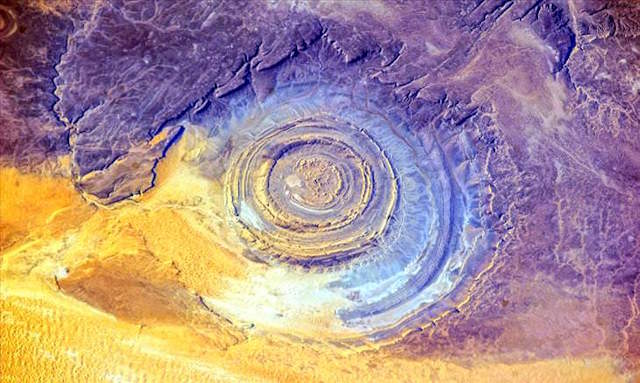
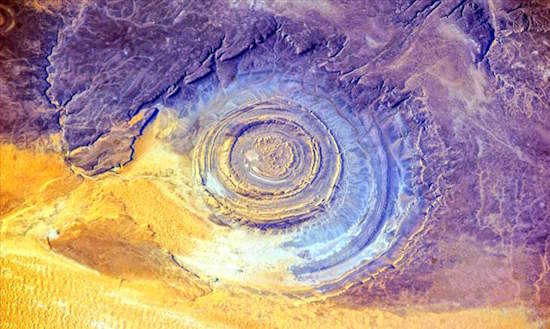
The Eye of the Sahara, Mauritania
This 25-mile-wide depression is reminiscent of a bull's-eye from the air.
It's located in the middle of a flat and featureless area of
Mauritanian desert. It was formed by wind erosion over the course of millions
of years. The wind eroded various layers of sediment, quartzite and other
rocks to give the Eye its appearance.
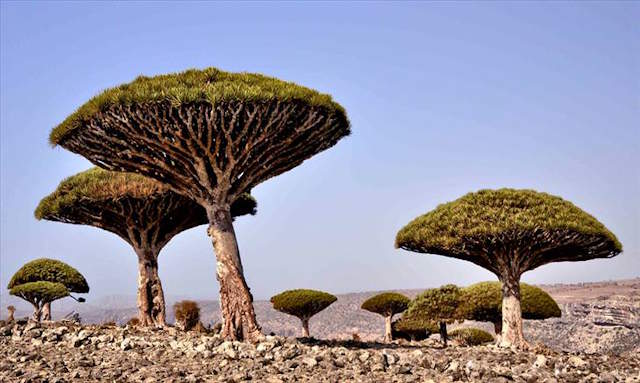
Socotra Archipelago, Yemen
The Socotra Archipelago has been isolated almost completely without interruption
for millions of years, which has resulted in some bizarre instances of evolution.
It is home to trees that ooze blood-red sap (pictured above), as well as others
that are shaped like bottles. In addition, there are 180 bird and 700 plant and
fauna species that aren't found anywhere else on earth.
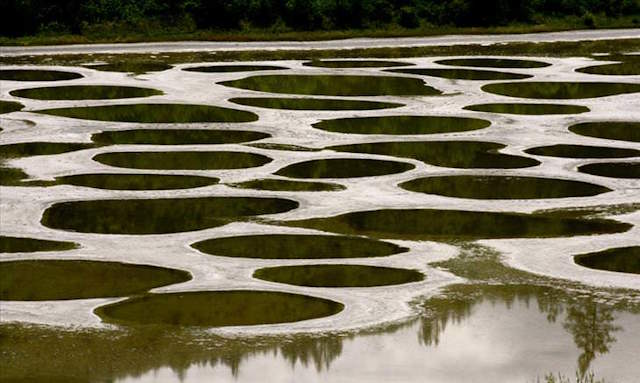
Spotted Lake, British Columbia
This lake emerges during the summer when most of its water evaporates,
leaving behind large concentrations of salt, titanium, calcium, sulfates,
and other minerals that form a polka-dot pattern on the surface. In
addition, the polka dots appear in different shades of green, yellow and
brown circles. The lake is a sacred site to the First Nations of the
Okanagan Valley.
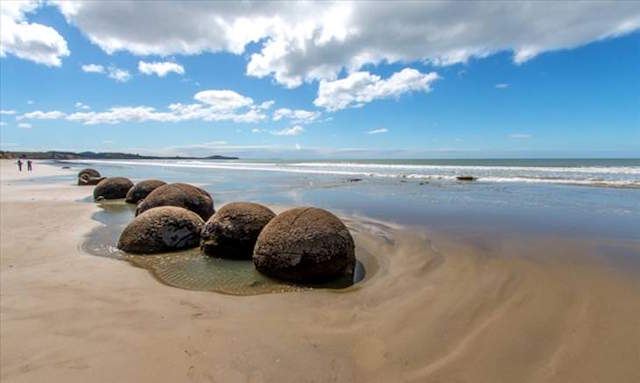
Moeraki Boulders, New Zealand
Although they appear to be have been put there by giants, these enormous
spherical structures are made up of masses of compacted sediment that
was formed underground more than 50 million years ago. The eroding sand
around them eventually led them to appear on the surface. They measure
several feet across.
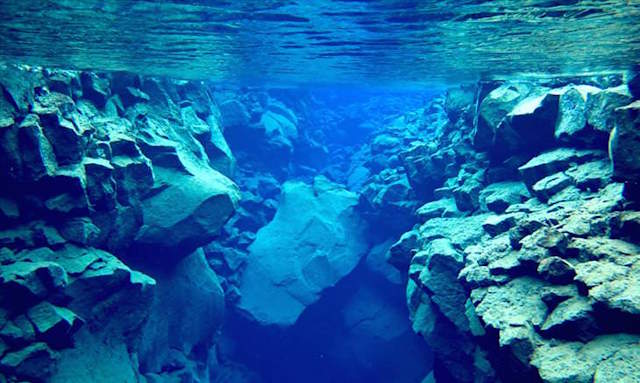
Silfra Rift, Iceland
This wondrous place allows you to swim and dive in a gigantic crack that
represents the boundaries between two tectonic plates. The water is so
clear in this location that divers report underwater visibility of up to
1,000 feet. It comes from melting glacial ice that takes over a century
to reach the rift.
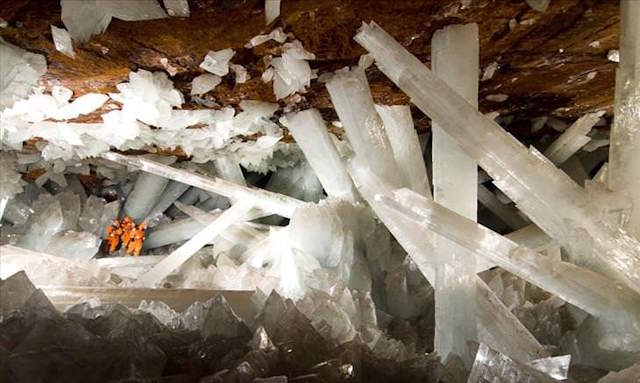
The Cave of the Crystals, Mexico
More than 1,000 feet underground in a working lead and silver mine,
giant crystals of gypsum crisscross a cave, sprouting out at all angles.
This cave was only discovered in 2000, and has to be navigated carefully,
because temperatures can reach 150 degrees Fahrenheit. That's not to
mention near 100% levels of humidity. Some of the crystals are four feet
wide and 50 feet in length.
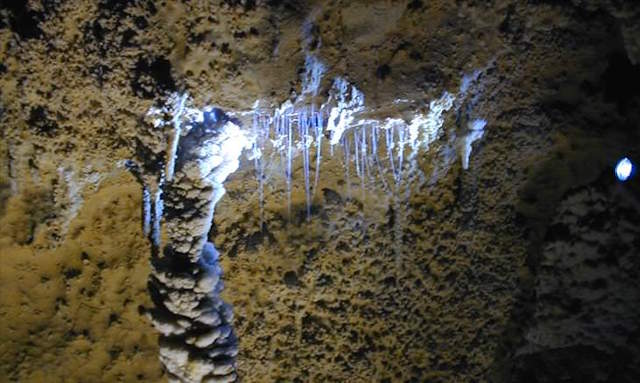
Waitomo Glowworm Caves, New Zealand
Bioluminescence is the ability of living organisms to illuminate themselves
in the darkness. It's actually possible to take a ride through the cave
system that these famous glowworms live in. As your eyes adjust to the
darkness, they collectively begin to look like a turquoise starscape.
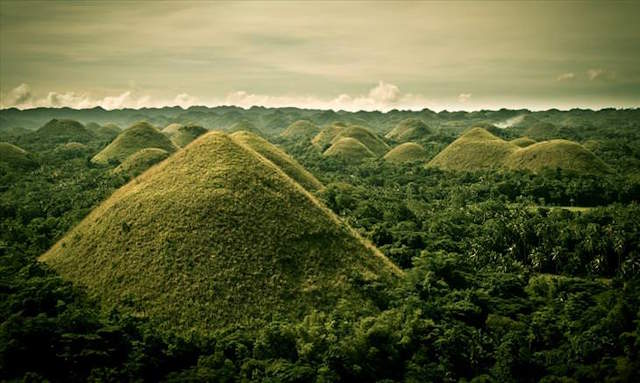
Chocolate Hills, The Philippines
On Bohol Island, there are some 2,000 symmetrically shaped hills that,
on occasion, rise 400 feet above the surrounding farmland. The Chocolate
Hills are actually made out of limestone, and are covered in grass. It's
pretty obvious to see why they're called the Chocolate Hills, isn't it?
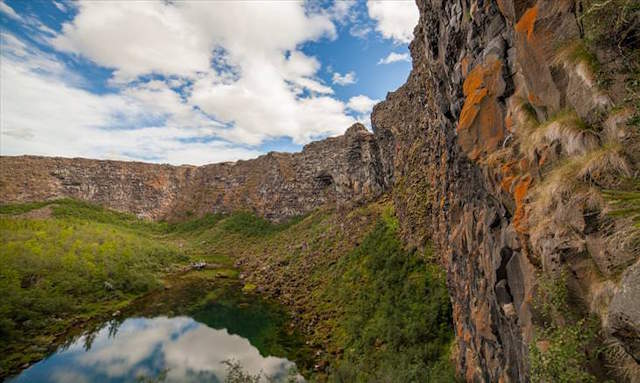
Asbyrgi Canyon, Iceland
Legend has it that this canyon was formed by the hoof of a Norse god's horse
touching the ground, but a much more plausible explanation is that it was
formed by glacial flooding between 3,000 and 10,000 years ago. The canyon is
two miles long and half a mile wide, and is surrounded by cliffs that are
more than 300 feet high.
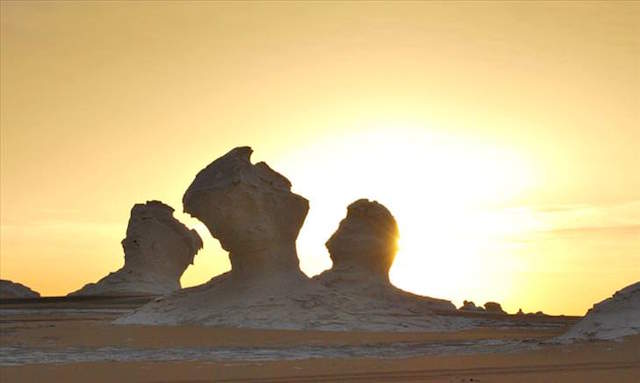
Sahara el Beyda, Egypt
As you can imagine, the Sahara Desert isn't the most varied landscape in the
world, but there are curious stone pillars that rise above the desert's sand
in certain places. At Sahara el Beyda, you can see the sharper, whiter layers
f sedimentary rocks peering through.
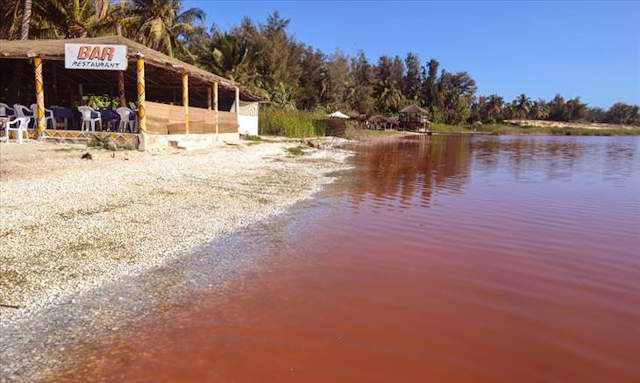
Lake Retba, Senegal
A particular kind of algae called Dunaliella Salina is the reason for this
unusual lake's pinkish-red color. It also has extremely high salt content,
which allows the algae to thrive and swimmers to float on its surface
effortlessly.
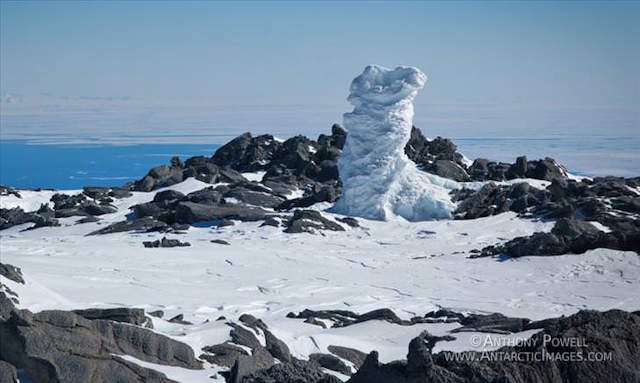
Ice Towers of Mount Erebus, Antarctica
Mount Erebus is the world's most southerly active volcano. Due to Antarctica
being so cold, escaping volcanic gas passes through caves and freezes, with
some of it forming into chimney towers that can stand more than 60 feet high
Content Source,
IMAGES:
1,
2,
3,
4,
5,
6,
7,
8,
9,
10,
11,
12,

Share God's Strange Earth
And Amaze All Your Friends! :)


SEE ALSO:
Alien-Looking Places On Earth!
^BACK To TOP^
For those of you who Want More FUN - Visit The Shangy Fun List! Variety is the
spice of life! The Shangy Fun List is an ezine packed full of Poems, Inspirational and
Heart Warming Stories. Jokes from G to slightly R, and Anything else that just
might make you SMILE! Join In The Free FUN!! ... :)
Yes! Click Here To GO TO THE ARCHIVES!-
Like This Page?
If you are looking for more, here are some good places to start:

Angel Falls!-
Shilin Stone Forest!-
Wieliczka Salt Mine!-
Rainbow Mountains!-
Cano Cristales River!-
Amazing Light Pillars!-
World's Largest Holes!-
Tornado And Rainbow!-
Darvaza - Door To Hell!-
World's Largest Mirror!-
Moses And The Red Sea!-
Mysterious Black Forest!-
Australian Fire Tornado!-
Beautiful Grand Canyon!-
World's Unusual Tunnels!-
Germany's Water Bridge!-
Lenticular Clouds Or UFO?-
Grand Teton National Park!-
Beautiful Galapagos Islands!-
World's Most Spectacular Places!-
A-Z Animated Picture Images!-


 -To SHANGRALA-
SPECIAL THANKS Goes To KAREN FRANKLIN And JOHANNA For Sharing This With Us.

Copyright © 1996 Netscape Communications Corporation. Mozilla is
a trademark of Netscape Communications Corporation.
Note: This is an Unofficial God, Jesus Christ, Family, & Cartoon Fan Site.
© All graphics representing Disney characters are copyrighted by Disney.
Likewise all other graphics & music Copyright © by their own Individual Artists.
I do not own any graphics on this site. If you do, please notify me
and I'll give
you proper credit, a link, or remove it immediately according to your wishes.
~*~ Copyright © 1997-2026 Elrhea M. Bigham ~*~