 SHANGRALA'S
RESCUED
BABY
DORMICE!

|
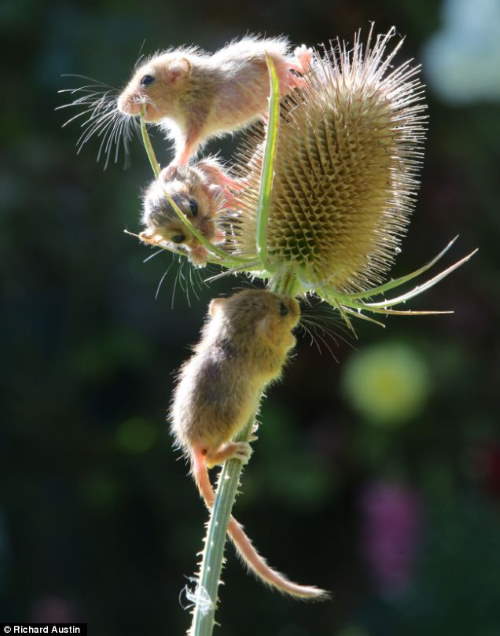
Thistle be a big adventure is what these cute little baby dormice were thinking.
As places to play go, it looks like a rather prickly one. But these baby dormice
were clearly feeling up for a challenge especially when there's a juicy
blackberry in sight. The plucky pair were in fact lucky to be alive after being
found orphaned.
Here Is Their Sweet Story. Enjoy! :) 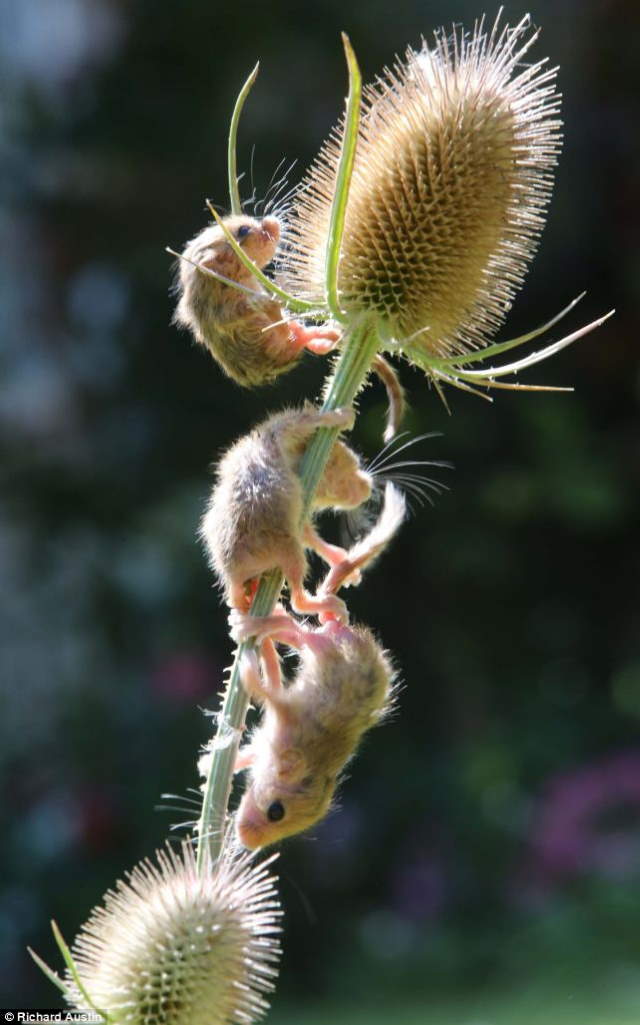
The Three Musketeers: This trio were fortunate enough to survive the car journey from Cornwall to Somerset after a member of the public discovered them alone in their nest. 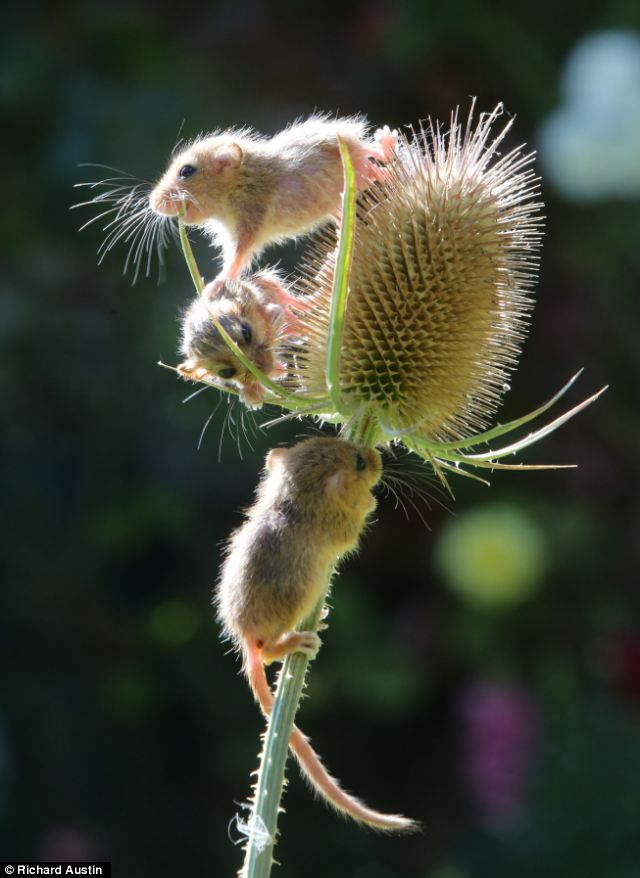
The youngsters were rescued by a man and woman in the hamlet of Middlewood on the edge of Bodmin Moor, Cornwall. 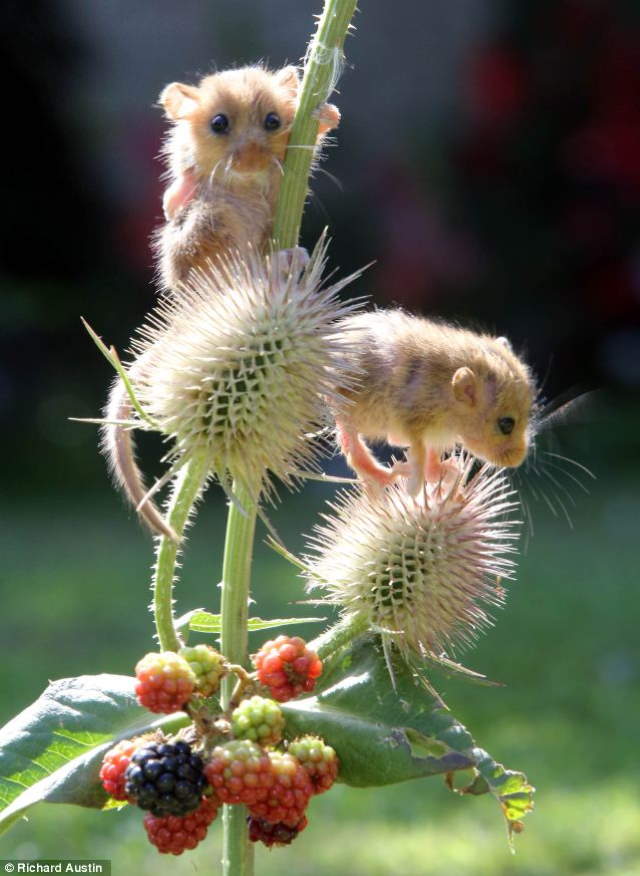
Blissfully unaware: Their mother was found dead just a meter away from the nest but the little ones seem keen to carry on playing as normal. Geoff Brown heard their squeals coming from a beech hedge in his garden. He called in his neighbour Jen Bousfield - who happens to monitor the endangered species - to investigate and she soon recognised the mice were in danger. She found six orphans in total in the hedge, with their dead mother lying close by. Soon after, she and her husband Peter drove the animals to Secret World, at Highbridge in Somerset. 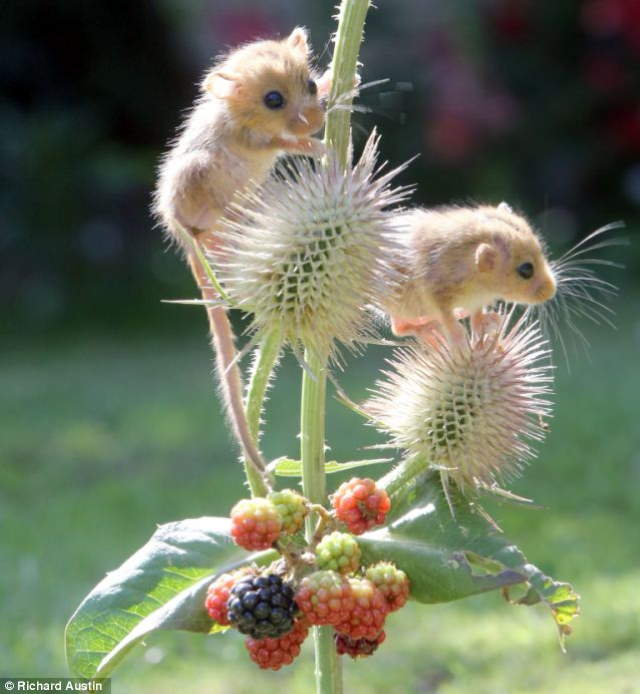
The survivors are doing well at Secret World Animal Rescue in Somerset - playing on the teasle and being introduced to wild blackberries. 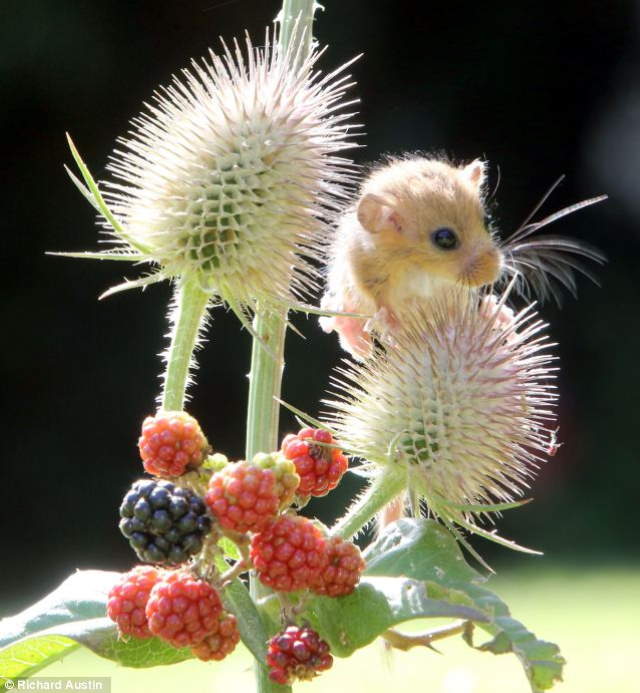
No longer feeding off mum: The trio are being hand reared on goats milk. 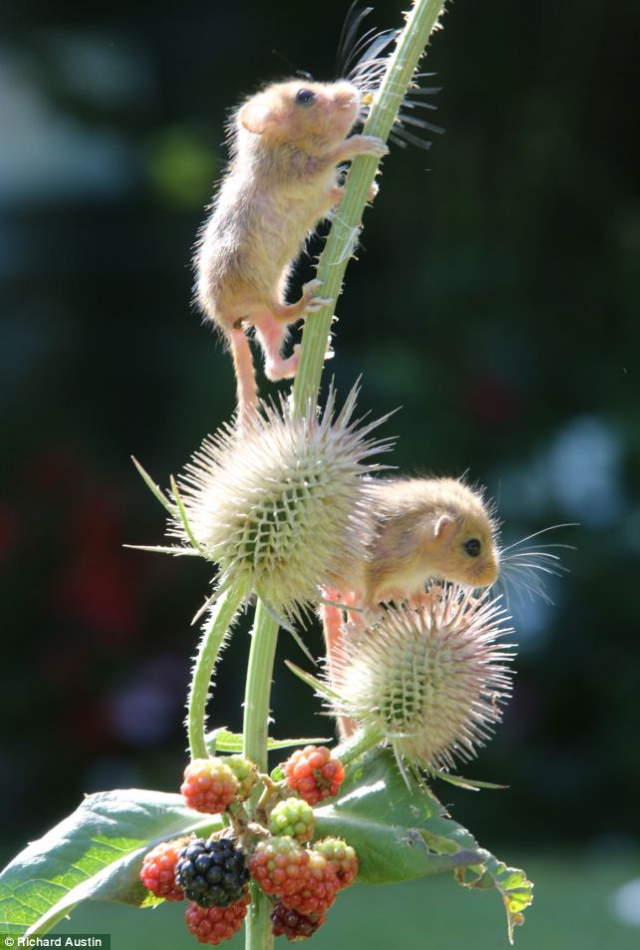
The tiny mammals are small enough to easily fit in the palm of a human hand. Charity founder Pauline Kidner said that sadly one did not survive the two-and-a-quarter-hour journey and two others had died later - but three survivors, including the pair in the picture, were all doing well. She said: 'They are being fed on honeysuckle, blackberries and chopped nuts and if their weight reaches 40g before winter, then we will release them back into the wild but if not then we'll look after them for release in the spring.' 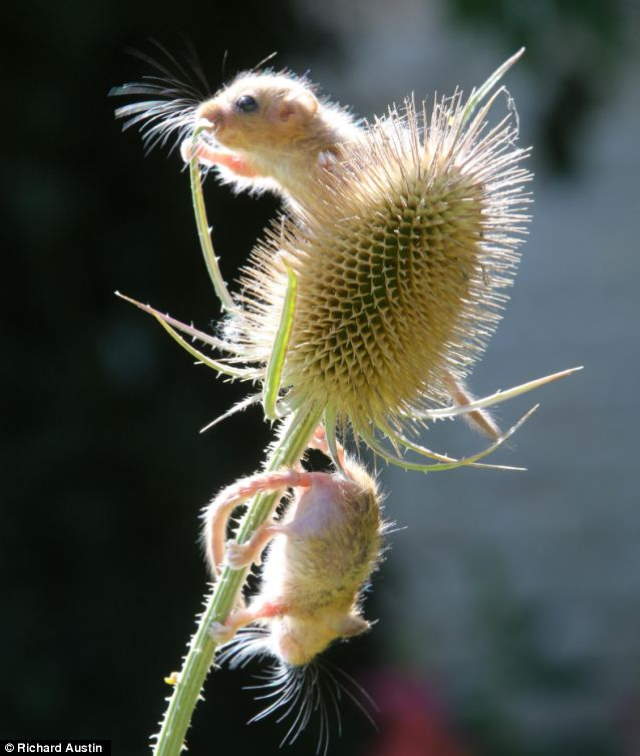
The cute rodents are mostly found in Europe but some are also found across Africa and Asia. Dormice can live for up to five years and hibernate for as many as six months of the year. 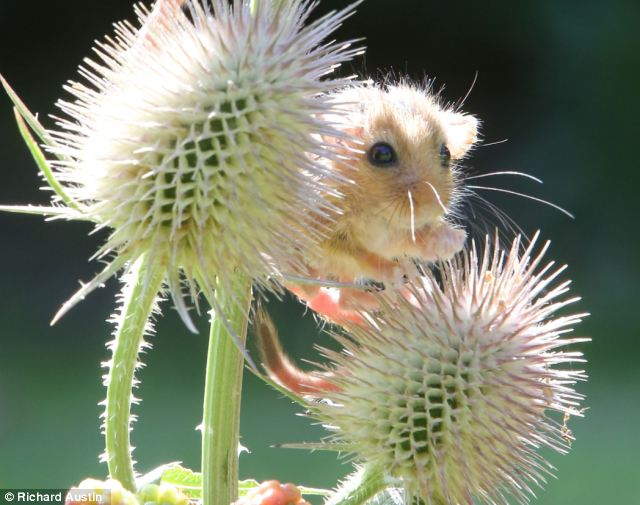
Keeping an eye on things: When the dormice are released they will have to watch out for predators like owls, weasels and stoats. |

Share God's Little Cuties...
And Give SMILES To All Your Friends! :)


SEE ALSO: Mouse VS Leopard!
^BACK To TOP^

For those of you who Want More FUN - Visit The Shangy Fun List! Variety is the
spice of life! The Shangy Fun List is an ezine packed full of Poems, Inspirational and
Heart Warming Stories. Jokes from G to slightly R, and Anything else that just
might make you SMILE! Join In The Free FUN!! ... :)
Yes! Click Here To GO TO THE ARCHIVES!-

Like This Page?
If you are looking for more, here are some good places to start:

Slow Loris!-
White Ligers!-
When It Rains!-
Crocodile Man!-
Bizarre Nature!-
A Little Froggy!-
Finger Monkeys!-
Cute Little Pikas!-
Rare Exotic Cats!-
Real Angry Birds!-
Natural Show-Offs!-
Dangerous Critters!-
Rhinoceros Hornbill!-
Rarely Seen Critters!-
Albino Hummingbird!-
Endangered Primates!-
Beautiful Exotic Birds 2!-
Cute Australian Wildlife!-
Underwater Life Of Eilat!-
Amazing Albino Animals!-
Critters We Love To Hate!-
Incredible Wildlife Photos!-
Ocean Photo Winners 2025!-
World's Most Expressive Cat!-
Rami: Pitbull-Dachshund Mix!-
A-Z Animated Images!-


 -To SHANGRALA-
SPECIAL THANKS Goes To KAREN FRANKLIN For Sharing This With Us.

Copyright © 1996 Netscape Communications Corporation. Mozilla is
a trademark of Netscape Communications Corporation.
Note: This is an Unofficial God, Jesus Christ, Family, & Cartoon Fan Site.
© All graphics representing Disney characters are copyrighted by Disney.
Likewise all other graphics & music Copyright © by their own Individual Artists.
I do not own any graphics on this site. If you do, please notify me and I'll give
you proper credit, a link, or remove it immediately according to your wishes.
~*~ Copyright © 1997-2026 Elrhea M. Bigham ~*~